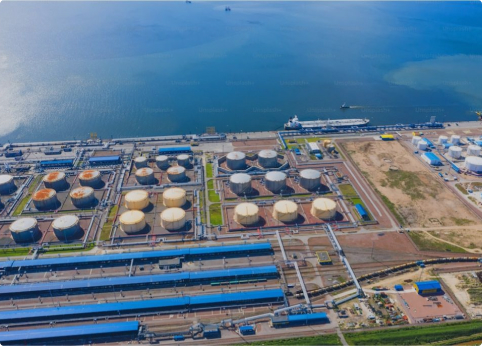
Quick answer: Oil and gas private equity is the practice of investing private capital in energy companies and assets — across the upstream, midstream, and downstream sectors — to create value and generate returns. Firms typically acquire, grow, and improve energy businesses over a multi-year hold, using strategies such as buyouts, growth capital, and distressed investing, before exiting through a sale, merger, or public offering.
What is oil and gas private equity?
Oil and gas private equity involves raising capital from institutional and accredited investors and deploying it into privately held energy companies or assets. Rather than trading public shares, private equity firms take concentrated, often controlling positions, actively work to increase the value of what they own, and realize returns when they exit. In the energy context, that can mean funding drilling programs, acquiring producing assets, building midstream infrastructure, or backing management teams to grow a business. It is a long-horizon, hands-on form of investing suited to a sector defined by large capital requirements and cyclical prices.
Why does oil and gas private equity matter?
Energy is one of the most capital-intensive industries in the world, and private equity is a major source of the funding that develops reserves, builds infrastructure, and supports operators through market cycles. For investors, the sector offers the potential for strong returns and portfolio diversification, along with exposure to real assets. For the companies that receive it, private capital provides not only funding but also operational expertise, discipline, and access to networks. Understanding how this form of investing works matters because the sector's volatility means the difference between skilled and unskilled capital deployment is especially large.
How does oil and gas private equity work?
The model follows a recognizable arc. A firm raises a fund with committed capital, then sources and evaluates opportunities across the value chain. Promising deals go through rigorous due diligence before capital is committed. Once invested, the firm works to improve the asset or company — optimizing operations, strengthening management, and pursuing growth — over a hold period that typically spans several years. Finally, the firm exits to return capital and profits to investors. Success depends on disciplined entry, active value creation during the hold, and well-timed exits.
What investment strategies are used?
Several strategies are common in the sector. Buyouts acquire controlling stakes in established companies or assets. Growth capital funds the expansion of businesses that need capital to scale. Distressed and special-situations investing targets undervalued or financially stressed assets, which the cyclical nature of energy regularly produces. Firms also pursue asset acquisitions, buying producing properties directly to generate cash flow. Our guide to key investment strategies in oil and gas private equity examines how firms select and combine these approaches to match market conditions and risk appetite.
How are risk and value creation managed?
Because energy investments carry substantial price, operational, and regulatory risk, managing that risk is central to returns. Firms diversify across assets and basins, hedge commodity price exposure, and conduct thorough due diligence to avoid surprises — approaches covered in our guide to risk management in oil and gas private equity. On the value-creation side, firms improve operational efficiency, strengthen management, and pursue growth to raise the worth of their holdings before exit. Commodity hedging is a particularly important tool for protecting the cash flows that underpin returns; see our introduction to natural gas hedging for how price risk is managed.
How do firms exit, and how does ESG factor in?
Exits realize the returns on an investment, most commonly through a sale to a strategic or financial buyer, a merger, or an initial public offering, with timing driven by asset maturity and market conditions — explored in our guide to exit strategies in oil and gas private equity. Increasingly, environmental, social, and governance (ESG) factors shape both how firms operate assets and how attractive those assets are to future buyers and lenders, making ESG integration a driver of long-term value rather than a compliance afterthought.
What are best practices, and where does expert support fit?
Best practice in oil and gas private equity is to combine disciplined due diligence, active operational improvement, deliberate risk management, and a clear exit plan from the outset. Independent expertise strengthens each stage — particularly the evaluation of assets and the management of commodity price risk that so often determines returns. Mobius Risk Group's asset and acquisition review and strategic capital advisory services support investors and portfolio companies in evaluating assets, structuring risk, and protecting value across the investment lifecycle.
Frequently asked questions
What sectors does oil and gas private equity invest in?
Firms invest across the value chain — upstream exploration and production, midstream infrastructure such as pipelines and processing, and sometimes downstream and energy services — depending on their strategy and market outlook.
What is the typical hold period?
Hold periods commonly span several years, giving the firm time to improve operations, grow the business, and exit when asset maturity and market conditions align to maximize returns.
Why is due diligence so important in energy private equity?
Energy assets carry significant geological, operational, and regulatory uncertainty. Thorough due diligence uncovers these risks before capital is committed, which is why it is one of the most important determinants of investment success.
How does commodity price risk affect returns?
Because oil and gas revenues depend directly on volatile prices, unmanaged price swings can sharply alter returns. Firms use hedging and diversification to protect the cash flows that support their investments.