
August 6, 2026
Gulf Coast hurricanes affect energy prices by disrupting offshore production, refining, processing, and LNG exports concentrated along the Texas and Louisiana coast. The result is sharp, hard-to-predict swings in natural gas, power, and fuel prices — and in basis — that can undermine unhedged budgets during the June–November season.
How do hurricanes move energy prices?
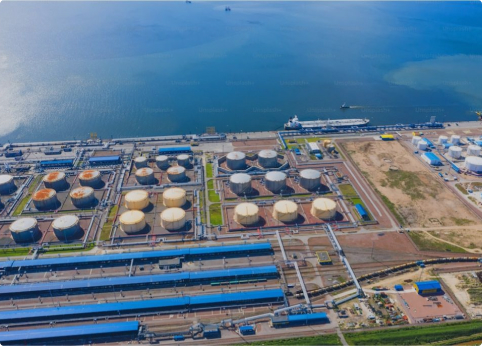
The Gulf Coast is the center of gravity for U.S. energy. A large share of offshore oil and gas production, refining capacity, gas processing, and LNG export terminals sits in the storm track. When a major hurricane forces shut-ins and evacuations, supply can drop suddenly while demand for power and fuel shifts.
The price reaction is rarely simple. A storm that knocks out LNG export demand can be bearish for domestic gas even as it is bullish for fuel; a storm that shutters refineries can widen crack spreads while pressuring crude. This two-sided, location-specific volatility is why weather risk deserves its own place in a hedging program.
Which energy exposures are most weather-sensitive?
Basis risk is often the sharpest exposure. Prices at Gulf Coast hubs and pipelines can dislocate from benchmark indices when infrastructure goes offline, so a hedge tied to the wrong location may not pay off when it is needed most.
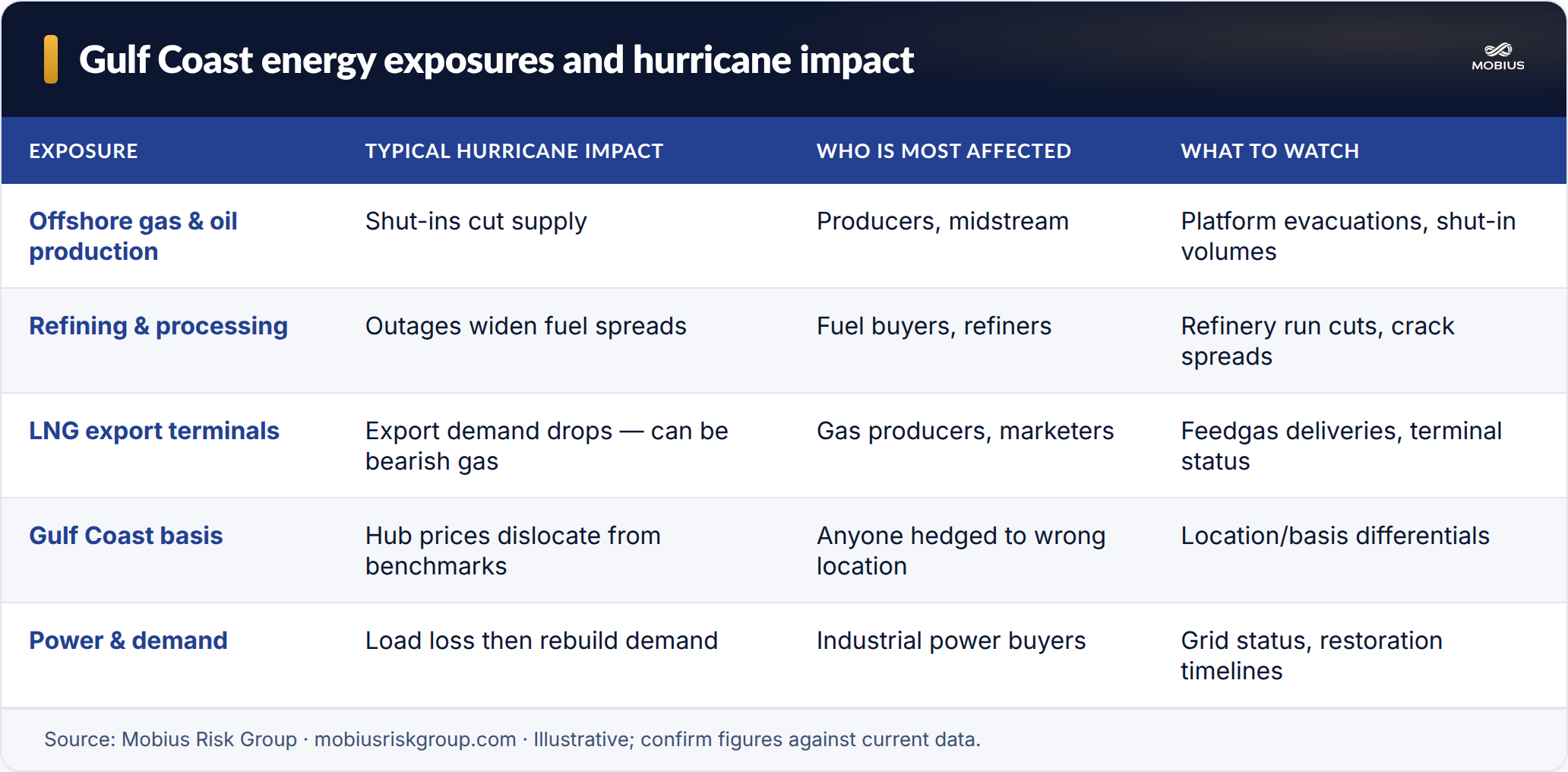
The table below maps the main Gulf Coast energy exposures to how hurricanes typically affect them and what buyers and producers can watch.
How should companies prepare hedging programs for hurricane season?
Preparation starts before the season, not during a named storm. Review location and basis exposure, stress-test the portfolio against shut-in and demand-shock scenarios, and confirm that hedges are tied to the hubs where you actually transact.
During the season, monitoring matters: a disciplined process for tracking developing systems and their likely fundamental impact lets a risk committee act on analysis rather than headlines. Mobius's market intelligence suite — including CrudeHQ and MidstreamHQ — is built to support exactly that kind of decision-making.
What is the role of an independent advisor in weather risk?
Weather-driven volatility is where conflicted advice is most expensive. An independent, unconflicted advisor helps a company separate signal from noise, size hedges to real exposure, and avoid reactive trades that lock in losses at the worst moment. The value is a steady framework that holds up when the market is moving fast.
Frequently asked questions
Do hurricanes always raise natural gas prices?
No. The effect is two-sided. A hurricane that shuts in offshore production can be bullish for gas, but one that knocks out LNG export terminals reduces demand and can be bearish. The net price effect depends on which infrastructure is hit and for how long.
What is basis risk during hurricane season?
Basis risk is the risk that the price at your specific delivery location diverges from the benchmark index you hedged against. Hurricanes frequently cause Gulf Coast hub prices to dislocate from national benchmarks, so a location-mismatched hedge may underperform when protection is needed most.
When is Gulf Coast hurricane season?
Atlantic hurricane season runs from June 1 through November 30, with peak activity typically from August through October — the window when Gulf Coast energy infrastructure faces the greatest disruption risk.
How can Mobius help manage hurricane-related energy risk?
Mobius combines independent advisory with market intelligence (including CrudeHQ and MidstreamHQ) and the RiskNet platform to help clients stress-test weather scenarios, align hedges to the right locations, and act on analysis rather than headlines during the season.
About Mobius Risk Group
Mobius Risk Group is an independent, unconflicted commodity risk advisor founded in 2002 and headquartered in Houston. Mobius combines expert advisory with proprietary technology — including the RiskNet CTRM platform and M(β)risk analytics — to help producers, industrial buyers, CFOs, and investors manage commodity risk with confidence. Contact Mobius to discuss your exposure.
Subscribe to receive the latest Mobius Research & updates