
June 24, 2026
Quick answer: Hurricane season affects natural gas prices by disrupting both supply and demand along the Gulf Coast at the same time. Storms shut in offshore and onshore production, halt LNG export and processing, and knock out power demand — creating sharp, hard-to-predict price swings that peak from August through October.
Why is the Gulf Coast so important to natural gas prices?
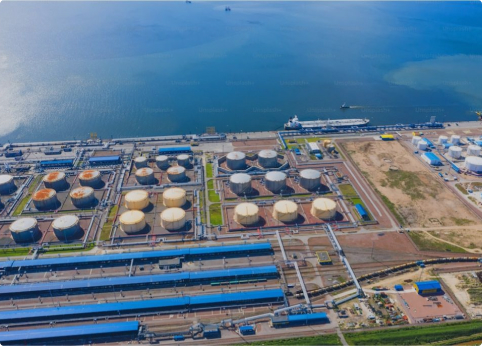
The U.S. Gulf Coast concentrates an outsized share of the country's energy infrastructure in a single hurricane-exposed corridor. Offshore and onshore production, major processing plants, interstate pipeline headers, and the bulk of U.S. LNG export capacity all sit within reach of a landfalling storm. When a hurricane tracks into that corridor, it can remove supply, demand, and export outlets from the market in a matter of hours — which is why weather is a first-order price driver for natural gas, not a background factor.
For a Houston-based, Gulf Coast-focused advisor like Mobius Risk Group, this geography is the whole point: the same storms that threaten a producer's wellhead volumes can simultaneously spike a chemical buyer's feedstock and power costs. Managing that two-sided exposure is a core reason companies build a deliberate weather-risk strategy rather than reacting storm by storm.
How exactly does a hurricane move natural gas prices?
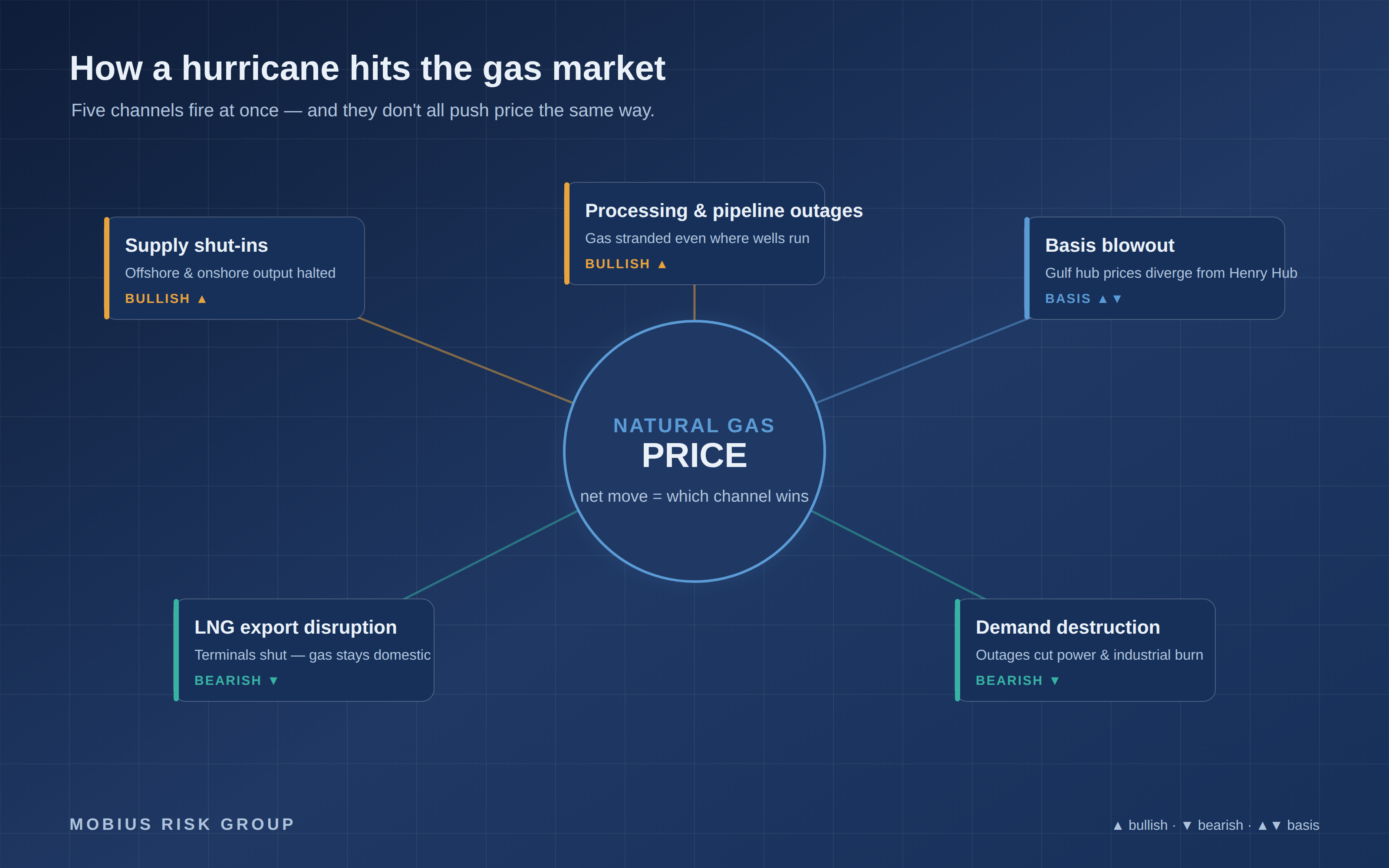
A hurricane hits the natural gas market through several channels at once, and they don't always push price the same direction — which is what makes the moves so volatile:
- Supply shut-ins: Producers and operators pre-emptively shut in offshore and coastal production ahead of a storm. Less gas reaching the market is bullish for price.
- Processing and pipeline outages: Damaged or powered-down processing plants and pipeline compression can strand gas even where wells are intact, tightening deliverable supply.
- LNG export disruption: When Gulf Coast liquefaction terminals shut, gas that would have been exported stays in the domestic market — a bearish, supply-lengthening effect that can offset or reverse the shut-in bump.
- Demand destruction: Widespread power outages and shuttered industrial load cut gas burn for electricity and feedstock, which is bearish.
- Storage and basis effects: Regional pipeline constraints can blow out basis differentials at Gulf Coast hubs even when the national Henry Hub benchmark barely moves.
The net price reaction depends on which channel dominates for a given storm. A hurricane that destroys export demand and industrial load can send prices lower even as it shuts in production — the opposite of the intuitive storm-equals-higher-prices assumption. That ambiguity is precisely why weather risk needs to be modeled, not guessed.
When is the risk highest?
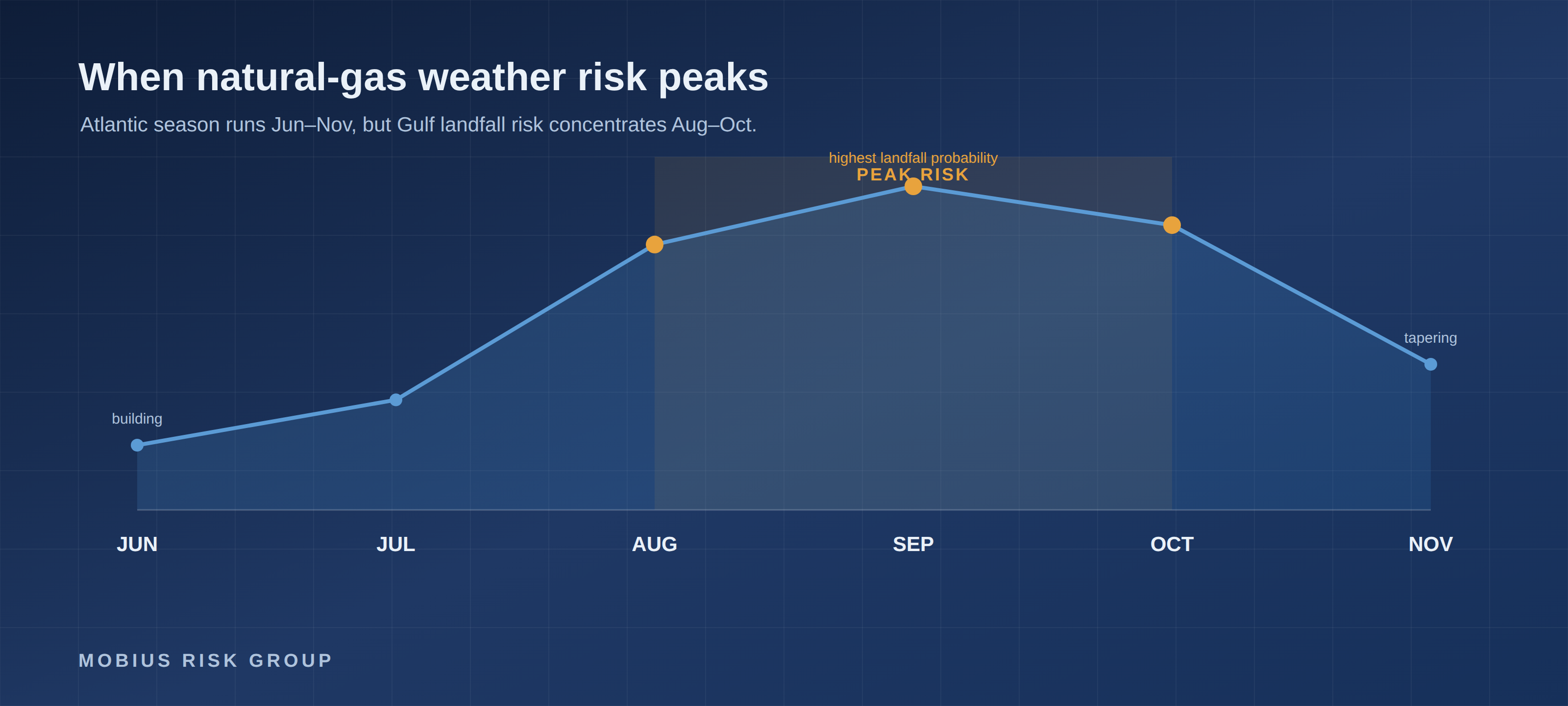
The Atlantic hurricane season runs June 1 through November 30, but the risk to natural gas is not evenly distributed. Activity and Gulf-of-Mexico landfall risk concentrate from mid-August through October, overlapping the shoulder period when storage injection season is ending and the market is positioning for winter:
- June–July (building): Early-season storms; the market watches formation but disruptions are usually smaller.
- August–October (peak): Highest Gulf landfall probability, overlapping the end of injection season and pre-winter positioning — the largest price sensitivity.
- November (tapering): Late-season storms remain possible, but attention shifts to winter heating demand.
Seasonal probabilities vary by forecaster and year, so use the current NOAA seasonal outlook and your own risk model for live decisions rather than rules of thumb.
How can producers and buyers hedge hurricane-season price risk?
Because a storm can move price in either direction, the goal is not to bet on hurricanes but to bound the outcome so a single weather event can't dictate the quarter. In practice that means combining instruments and analytics:
- Options-based structures (collars, puts, calls) that cap downside or upside without locking in a single price, so the position survives a two-sided storm reaction.
- Basis hedging at the relevant Gulf Coast hubs, not just Henry Hub, so localized pipeline constraints are covered.
- Scenario and stress analysis that models shut-in, export-outage, and demand-destruction cases before the season — quantifying exposure with analytics such as Mobius's M(β)risk.
- Continuous position monitoring through a CTRM platform like RiskNet so exposures, mark-to-market, and hedge effectiveness stay visible in real time when a storm develops.
Mobius Risk Group's role as an independent, unconflicted advisor is to help design and monitor that program — sizing the hedge to the company's actual physical exposure through Strategy Direct advisory, rather than selling a product with an embedded position. That independence matters most in a volatile, headline-driven market.
Key takeaways
- Hurricanes move natural gas prices by hitting supply, processing, LNG export, and demand simultaneously — the net direction is not always up.
- Risk peaks August–October, when Gulf landfall probability overlaps pre-winter market positioning.
- The right response is a bounded, analytics-driven hedge program with hub-level basis coverage and real-time monitoring — not a directional weather bet.
Frequently asked questions
Do natural gas prices always go up during hurricane season?
No. While storms can shut in supply and push prices higher, they also destroy demand and can halt LNG exports, which keeps gas in the domestic market and pressures prices down. The net effect depends on the specific storm, so both directions must be hedged. Storms that knock out LNG export demand or destroy power load can push prices down instead, so the net effect depends on what the storm actually disrupts.
Which months carry the most hurricane risk for natural gas?
August through October carry the highest Gulf of Mexico landfall risk and overlap with the end of storage injection season, making the market especially price-sensitive to storms during that window.
What is basis risk in the context of hurricanes?
Basis risk is the risk that the price at a specific Gulf Coast delivery hub diverges from the Henry Hub benchmark. Hurricanes can constrain regional pipelines and blow out basis differentials even when the national benchmark barely moves, so hedging only Henry Hub can leave real exposure uncovered.
How can a company prepare its hedging program before hurricane season?
Model shut-in, export-outage, and demand-destruction scenarios ahead of the season, size hedges to actual physical exposure, add hub-level basis coverage, and put real-time position monitoring in place. An independent advisor can build and monitor that program without a conflicting market position.
Subscribe to receive the latest Mobius Research & updates