
August 13, 2026
Quick answer: Gulf Coast hurricanes can shut in production, disrupt LNG and refining, and trigger sharp swings in natural gas and power prices. Producers, midstream operators, and buyers manage this weather-driven risk with pre-positioned hedges, flexible contracts, and contingency planning built before peak season.
Why does hurricane season move energy prices?
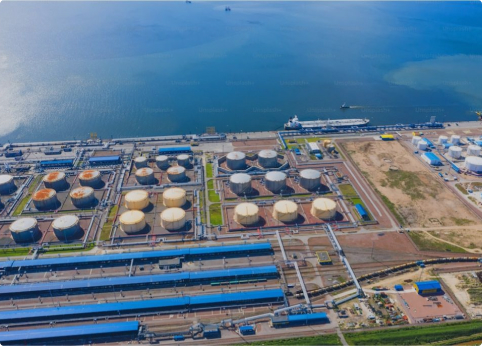
The U.S. Gulf Coast concentrates a large share of the country's crude production, natural gas processing, LNG export capacity, and refining. When a major storm tracks toward that infrastructure, operators shut in offshore platforms, pipelines and processing plants go offline, and export terminals halt—removing supply from the market in days. Prices for natural gas, power, and refined products can spike on the threat alone, then reverse just as fast if the storm weakens or misses. That two-sided volatility, compressed into a short window, is what makes the August–October season a distinct risk to manage.
Who is exposed to Gulf Coast hurricane risk?
Exposure runs in both directions. Producers and midstream operators face lost volumes and shut-in revenue when assets go offline, plus basis blowouts at disrupted hubs. Industrial and chemical buyers face supply interruptions and price spikes on the fuel and feedstock they still need. Marketers and traders face margin and basis risk as regional spreads dislocate. Each needs a different response, but all benefit from deciding on a plan before a named storm is in the forecast cone.
What strategies manage weather-driven energy risk?
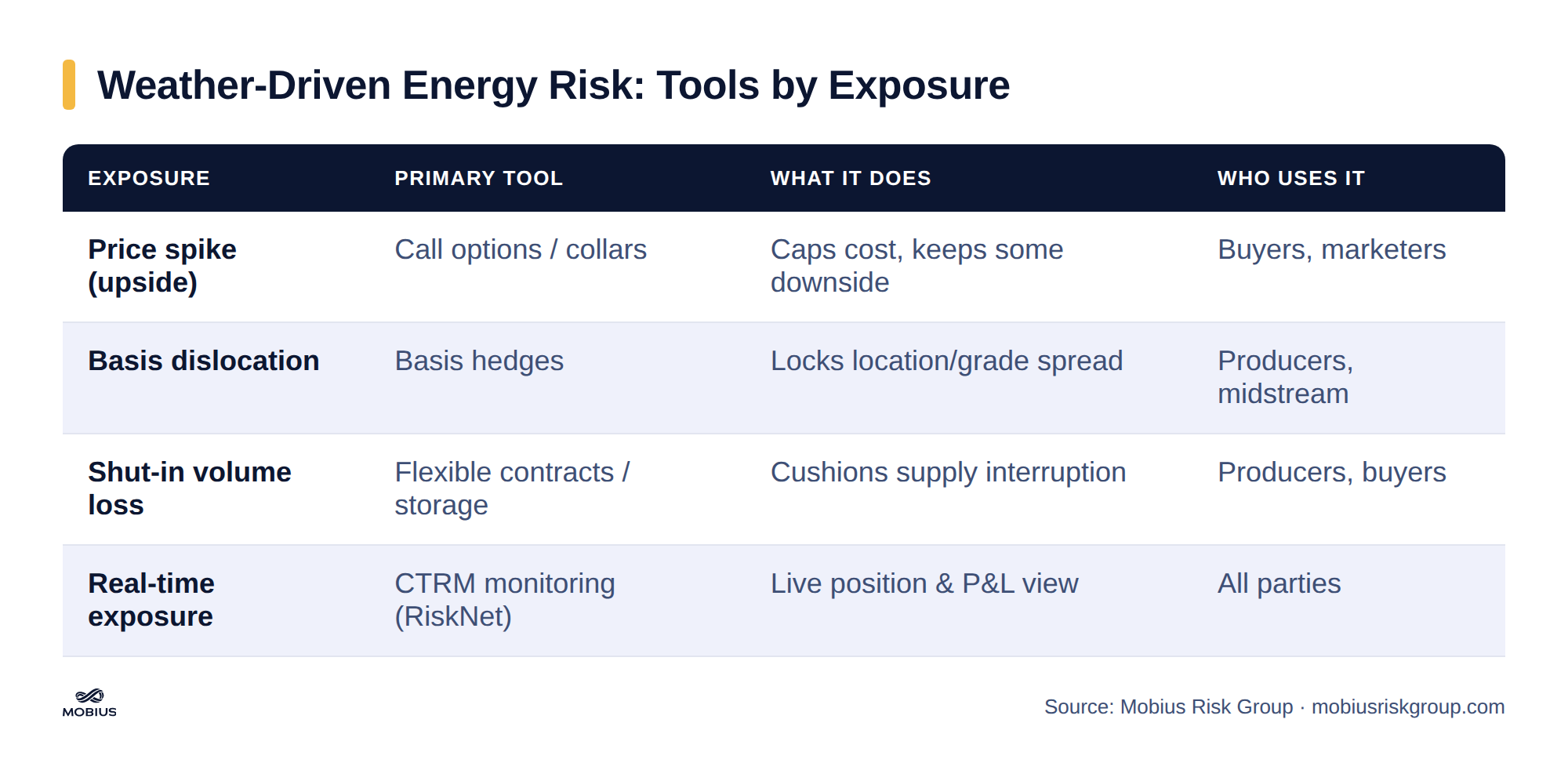
Effective programs combine financial and physical tools. On the financial side, options and collars put a ceiling on price exposure through the season without locking out favorable moves, and basis hedges address location-specific dislocation. On the physical side, flexible supply contracts, storage positioning, and pre-arranged alternate sourcing reduce operational disruption. The comparison table below maps common tools to the exposures they address.
Mobius Risk Group helps clients pressure-test these plans ahead of peak season and monitor exposure in real time through the storm window using RiskNet and its market-intelligence suite.
When should companies prepare for hurricane season?
The most expensive time to hedge weather risk is when a storm is already in the Gulf and volatility premiums have spiked. The disciplined approach is to establish the season's protection early—well before peak—when option premiums reflect normal conditions, and then manage the position dynamically as the outlook evolves. Reviewing exposure and contingency plans in the spring, and finalizing hedges before the August–October peak, keeps the buyer ahead of the market rather than reacting to it.
Weather-Driven Energy Risk: Tools by Exposure
Related from Mobius Risk Group: RiskNet CTRM Platform · Hedge Strategy Solutions · What Is an Energy Hedging Advisor?
Frequently asked questions
How do hurricanes affect natural gas prices?
Hurricanes can shut in offshore production and halt processing and LNG exports, removing supply and pushing prices up—sometimes on the forecast alone. If the storm weakens or demand for cooling falls after landfall, prices can drop just as sharply, creating two-sided volatility.
Can you hedge hurricane risk in energy markets?
You cannot buy insurance against a specific storm, but you can hedge the price and basis volatility hurricanes cause using options, collars, and basis instruments, and reduce operational risk with flexible supply and storage arrangements established before the season.
When is Gulf Coast hurricane season?
Atlantic hurricane season runs June 1 to November 30, with peak activity and the greatest energy-market impact typically from August through October, when Gulf water temperatures are warmest.
What is the best time to hedge for hurricane season?
Before peak season—ideally late spring to early summer—when option premiums reflect normal conditions. Waiting until a storm is in the Gulf means paying elevated volatility premiums for the same protection.
Mobius Risk Group is an independent, unconflicted commodity risk advisor. Talk to an advisor about building a program around your exposure.
Subscribe to receive the latest Mobius Research & updates