
July 6, 2026
QUICK ANSWER
Hurricane season affects natural gas prices in two directions at once: storms shut in Gulf Coast production and processing (pushing prices up), while knocking out LNG export terminals and air-conditioning demand (pushing prices down). The net move depends on what a given storm hits — and basis, the local-versus-Henry-Hub spread, often swings more than the flat price.
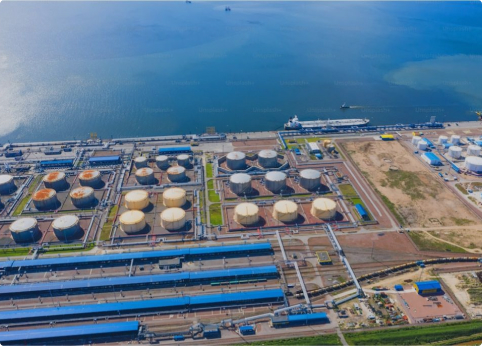
The U.S. Gulf Coast concentrates a large share of the country’s natural gas production, processing, pipeline, and LNG export capacity, so Atlantic hurricane season (June through November) is a recurring source of price volatility. For Gulf Coast producers, midstream operators, and industrial buyers, the risk is not just that prices move — it is that they can move sharply and in a direction that is hard to predict in advance.
Why is the Gulf Coast so exposed to hurricanes?
Landfalling and even near-miss storms force precautionary shut-ins of offshore and onshore production, halt gas processing, and can trip LNG liquefaction trains offline. Because so much supply, demand, and export capacity sits in a concentrated coastal footprint, a single storm can disrupt several links of the value chain at once — which is exactly why the price reaction is rarely one-directional.
Does a hurricane push natural gas prices up or down?
Both effects are in play, and they compete. The table below maps the main mechanisms and which way each tends to move price.
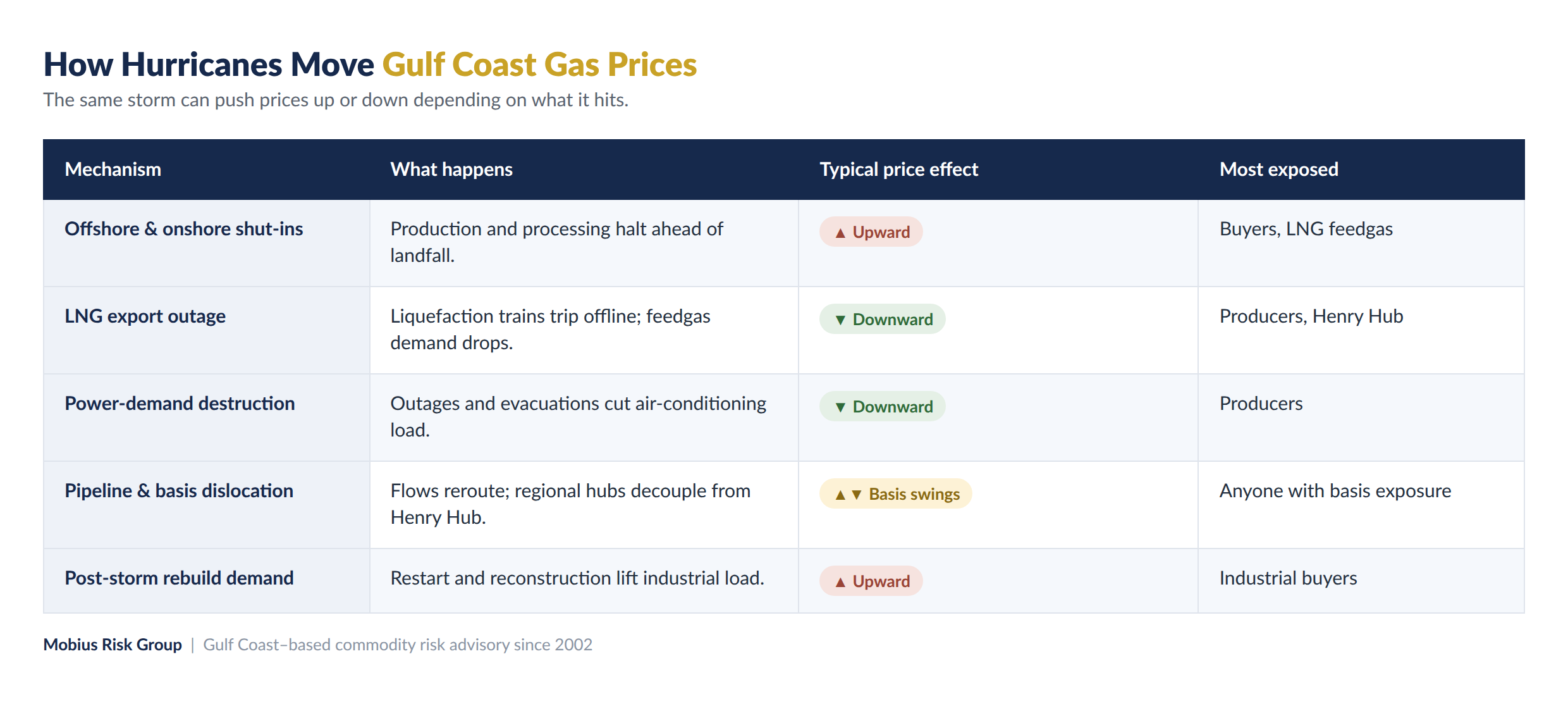
Historically, storms that primarily curtailed production tended to be bullish for gas, while storms that knocked out LNG export demand or destroyed power load were bearish, because supply backed up into a market with less demand. The modern twist is LNG: with more export capacity online, an export outage now removes a large block of demand quickly, so a supply-disrupting storm can still be net bearish for Henry Hub if it takes an export terminal down with it.
What is basis risk during hurricane season, and why does it matter?
Most financial hedges reference Henry Hub, but buyers and sellers transact at local delivery points. When a storm reroutes pipeline flows or strands supply, regional hubs can decouple sharply from Henry Hub — so a company can be perfectly hedged on flat price and still take a hit on basis. During hurricane season, basis is frequently where the largest and least-anticipated moves occur, which is why a weather-aware program hedges basis explicitly rather than assuming a Henry Hub hedge covers it.
How do you hedge hurricane-season natural gas risk?
- Separate flat price from basis — hedge the Henry Hub component and the local basis component deliberately, not as one lump.
- Use options for asymmetric, event-driven risk — calls or collars protect against a spike without locking you in if a storm turns out bearish.
- Layer coverage into the season — build protection ahead of peak months rather than reacting once a named storm is in the forecast and volatility (and option premiums) have already jumped.
- Stress-test the portfolio against storm scenarios — model shut-in, LNG-outage, and demand-destruction cases so you know your exposure before the season, not during it.
- Watch operational as well as price risk — physical delivery, force majeure, and counterparty performance all come under pressure during a major storm.
Mobius Risk Group is a Gulf Coast–based, unconflicted commodity risk advisor and brings weather-aware analytics to exactly this problem: exposure and positions are tracked in its RiskNet™ CTRM platform, storm and price scenarios are sized and stress-tested with M(β)risk™ analytics, and counterparty quotes are benchmarked against M-Direct indicative pricing — without the firm earning any spread or commission on the hedges it recommends.
Frequently Asked Questions
Do natural gas prices always go up during hurricanes?
No. Storms that shut in production tend to lift prices, but storms that knock out LNG export demand or destroy power load can push them down. The net effect depends on what the storm disrupts, and basis can move more than the flat price.
When is hurricane season for natural gas markets?
The Atlantic hurricane season runs June 1 to November 30, with peak activity typically from mid-August through October — the window when Gulf Coast gas and power markets are most weather-sensitive.
What is basis risk and why does it spike during storms?
Basis is the price difference between a local delivery point and the Henry Hub benchmark. Storms reroute flows and strand supply, causing regional hubs to decouple from Henry Hub, so basis can move sharply even when the benchmark is stable.
How can a company protect against hurricane-driven price swings?
By hedging flat price and basis separately, using options for event risk, layering coverage before peak season, and stress-testing the portfolio against storm scenarios — ideally with an independent advisor and a single analytics platform.
Subscribe to receive the latest Mobius Research & updates