
March 30, 2026
QUICK ANSWER
A deal-contingent hedge is a hedge that only becomes effective if a transaction closes. It lets an acquirer or financing party lock in commodity (or rate or FX) economics during the gap between signing and closing — and if the deal falls through, the hedge simply never activates, so there is no unwanted position to unwind. The protection carries a premium for that contingency.
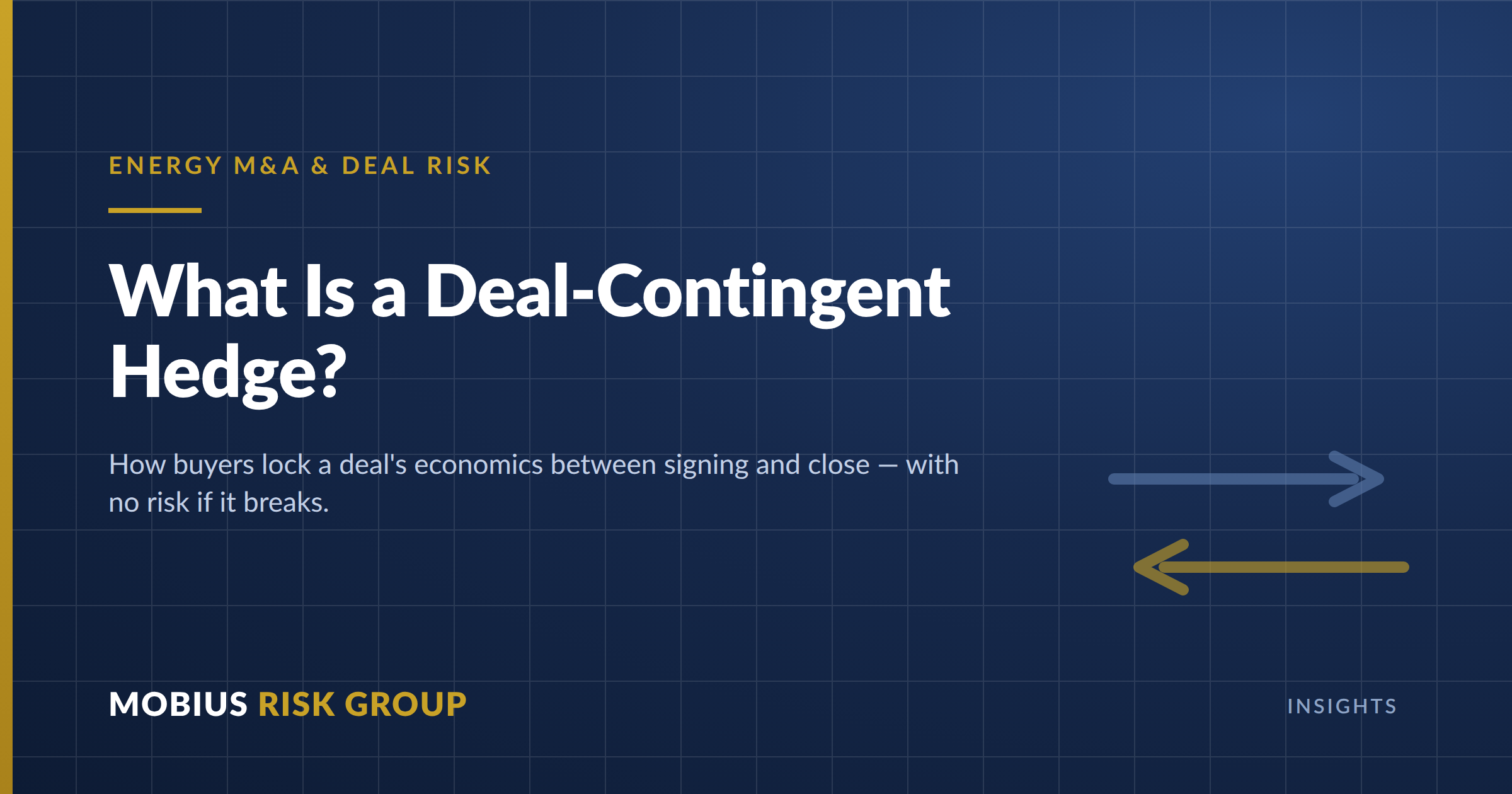
Between signing and closing, an energy deal is exposed: prices can move for weeks or months while regulatory approval and financing complete, eroding the economics that justified the price. A deal-contingent hedge closes that gap without creating a new risk if the deal does not happen.
How does a deal-contingent hedge work?
The hedge is written so it activates only on close. If the transaction completes, the buyer has locked the price it modeled; if it does not, the hedge disappears with no settlement obligation. That contingency is the whole value — and the reason it costs more than a standard hedge.
How is it different from a standard hedge?
The difference shows up entirely in the “what if the deal breaks” scenario, as the table makes clear.
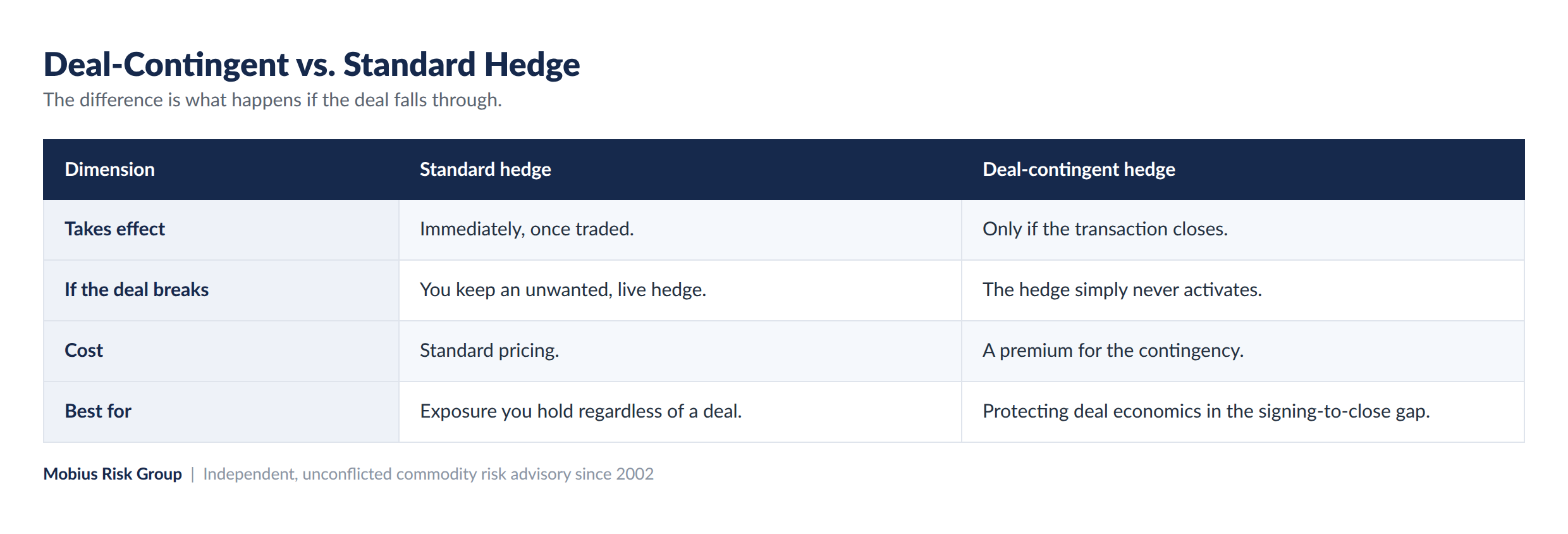
With a standard hedge, a failed deal leaves the buyer holding a live position it never wanted. With a deal-contingent hedge, that risk is removed — which is exactly why it is used in M&A and financing.
When should you use one?
Deal-contingent structures fit situations where a buyer wants to protect the economics of a specific transaction but cannot risk carrying a hedge if the deal collapses — acquisitions, project financings, and similar. They require modeling the combined, post-close exposure rather than the target’s book alone. The hedge itself is structured like any other part of an energy hedging strategy, sized to the specific transaction.
How Mobius Risk Group helps
Mobius provides independent, unconflicted support on deal-contingent and bridge hedges — modeling exposure, structuring the hedge, and benchmarking pricing — without earning a spread on the trade.
Frequently Asked Questions
What is a deal-contingent hedge?
A hedge that only takes effect if a transaction closes, letting a buyer lock deal economics during the signing-to-close period with no position to unwind if the deal breaks.
Why does a deal-contingent hedge cost more?
Because the counterparty bears the risk that the deal fails and the hedge never activates. That contingency is priced as a premium.
When are deal-contingent hedges used?
In M&A and project financing, to protect commodity, rate, or FX economics between signing and closing without risk if the transaction does not complete.
Subscribe to receive the latest Mobius Research & updates