
August 30, 2026
Quick answer: Hurricane season disrupts Gulf Coast oil and gas because roughly half of U.S. refining and a large share of production, processing, and LNG export capacity sit in the storm path. Shut-ins and outages can spike or depress prices depending on whether supply or demand is hit harder, making pre-season hedging essential for producers, midstream, and buyers.
Why is the Gulf Coast so exposed to hurricanes?
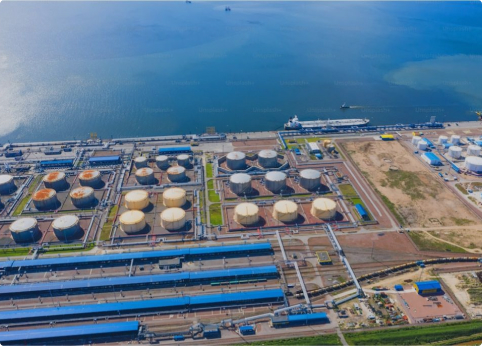
The U.S. Gulf Coast concentrates an outsized share of the country's energy infrastructure: offshore and onshore production, a large portion of national refining capacity, major gas processing, and the LNG export terminals that link U.S. gas to global demand [confirm]. Because so much sits in a narrow geography, a single major storm can force simultaneous production shut-ins, refinery outages, and export interruptions. That concentration is what converts a weather event into a market event.
Related: natural gas hedging strategies.
Do hurricanes push energy prices up or down?
It depends on which side of the barrel is hit hardest. When a storm shuts in offshore crude and gas production faster than it curbs demand, prices tend to rise on lost supply. When it knocks out refineries and export terminals, crude can back up onshore and soften while refined-product and sometimes gas prices spike. The direction is rarely uniform — which is why a blanket long or short view is risky, and structured hedges that bound both directions often fit better.
Who carries the most weather risk in the value chain?
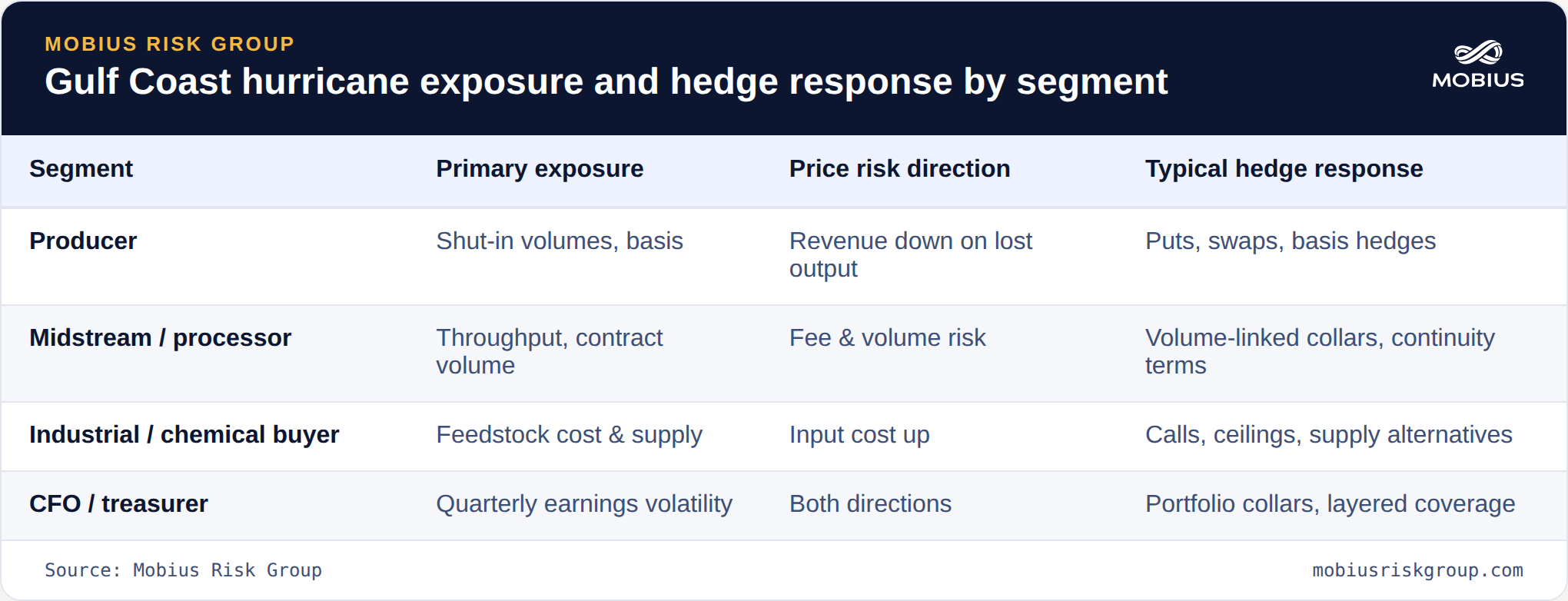
Producers face revenue risk from shut-in volumes and widening basis. Midstream and processors face throughput and contract risk when volumes stop moving. Industrial and chemical buyers face feedstock-cost and supply-continuity risk. CFOs and treasurers across all three face the earnings volatility that a single September storm can inject into a quarter. Each needs a different hedge response, not the same instrument.
How do you hedge Gulf Coast weather risk before the season?
The most reliable protection is put in place before a storm is named, when volatility is cheaper. Options and collars sized to at-risk volumes bound exposure without forcing a directional bet; basis hedges address the location risk that storms exaggerate; and continuity planning pairs the financial hedge with physical supply alternatives. Mobius helps Gulf Coast clients quantify seasonal exposure with M(β)risk and structure pre-season programs through RiskNet, rather than reacting once a system is already in the forecast cone.
See also: CTRM system.
Gulf Coast hurricane exposure and hedge response by segment
Frequently asked questions
When is peak hurricane season for Gulf Coast energy?
Atlantic hurricane season runs June 1 to November 30, with peak activity typically from mid-August through September — the window of greatest risk to Gulf Coast energy infrastructure.
Why don't hurricanes always raise oil prices?
A storm can knock out refining and export capacity as much as production. If demand for crude falls faster than supply, crude can soften even as refined-product prices rise. The net effect depends on what is damaged.
Can you hedge weather risk directly?
You can hedge the price and basis effects of weather using options, collars, and basis instruments sized to at-risk volumes. Weather derivatives exist too, but most Gulf Coast programs hedge the commodity-price and location exposure the weather creates.
How does Mobius help with hurricane-season risk?
Mobius quantifies each client's seasonal exposure with M(β)risk analytics and structures pre-season hedges through RiskNet as an independent advisor — no trading book opposite the client's position.
Subscribe to receive the latest Mobius Research & updates