
June 10, 2026
QUICK ANSWER
The main natural gas hedging strategies are swaps (fix the price), costless collars (a cap and floor at little or no premium), three-way collars (a collar with a better ceiling in exchange for some downside), options (pay a premium to keep upside), and basis hedges (lock the local-to-benchmark differential). There is no single best choice — it depends on your exposure and market view.
Every natural gas hedge trades away some flexibility for some certainty. The art is matching the structure to your objective — protecting a budget, defending cash flow, or capping a fuel cost — and to how much of a favorable move you are willing to give up. For the fundamentals, see our introduction to natural gas hedging.
What are the main natural gas hedging strategies?
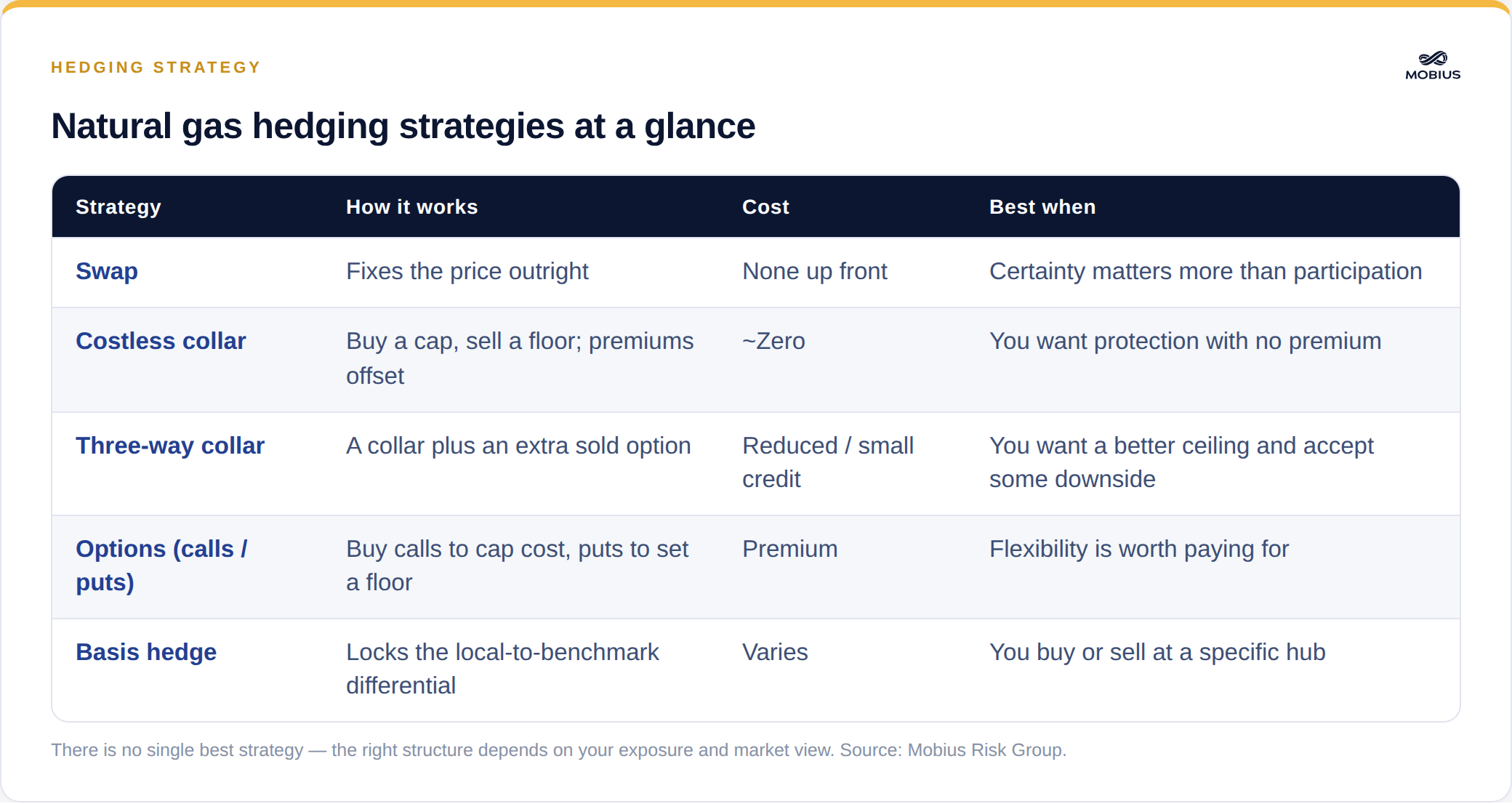
Most programs are built from five building blocks. The table below summarizes how each works, what it costs, and when it fits.
Swaps (fixed-for-floating)
A swap fixes the price of gas for a set volume and period. It removes price uncertainty entirely — you give up the upside if prices fall in exchange for full protection if they rise. Best when certainty matters more than participation.
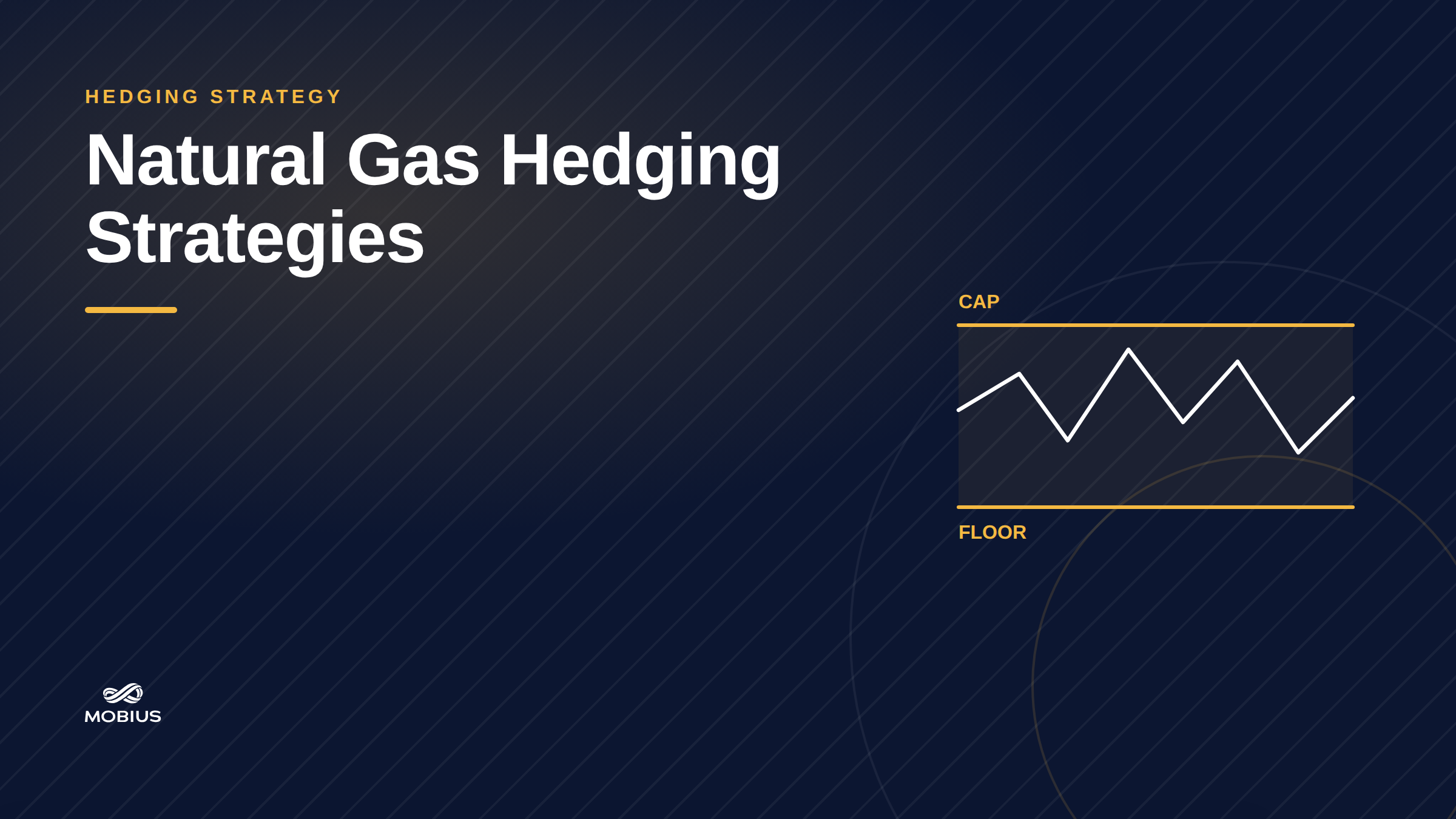
Costless (zero-cost) collars
A collar buys a cap and sells a floor so the premiums offset, creating a price range at little or no upfront cost. You are protected above the cap and exposed only within the band. See costless collars explained for a full walkthrough. Best when you want protection without paying premium and can accept a floor.
Three-way collars
A three-way collar adds a third option to a standard collar — typically selling an additional put below the floor — to lower cost or widen the cap. It improves the economics in exchange for reintroducing some downside below the sold put. Best for hedgers comfortable trading a defined slice of downside for a better ceiling.
Call and put options
Buying calls caps your cost while preserving downside participation; buying puts protects a floor for producers. Options cost premium but keep upside open. Best when flexibility is worth the premium.
Basis hedging
Local prices differ from the national benchmark by a "basis" tied to pipeline and regional dynamics. A basis hedge locks that differential so you are not exposed to location risk. Best for anyone buying or selling gas at a specific hub.
How Mobius Risk Group helps
Mobius helps clients choose among these hedging strategies, set the strikes, and benchmark pricing — as an unconflicted advisor with no stake in the trade.
Frequently Asked Questions
What is the best natural gas hedging strategy?
There is no single best one. Swaps give certainty, collars give low-cost protection, options preserve upside, and basis hedges address location risk — the right mix depends on your exposure and view.
What is a three-way collar?
A collar with an extra sold option that improves the cap or lowers cost, in exchange for accepting some downside below a lower strike.
Do producers and buyers hedge differently?
Yes. Producers protect a floor on the price they receive; buyers cap the price they pay. The same tools are mirrored to fit each objective.
Subscribe to receive the latest Mobius Research & updates