
March 16, 2026
QUICK ANSWER
A D3 RIN is a cellulosic renewable identification number generated by qualifying renewable natural gas under the federal Renewable Fuel Standard. Along with LCFS credits under state low-carbon fuel programs, D3 RINs often make up the majority of RNG revenue — and because their value is set by policy and program balances, they are far more volatile than the underlying gas.
Renewable natural gas is priced as a stack: the gas itself plus environmental credits. For many RNG projects the credits, not the gas, are where most of the value — and most of the risk — sits.
What is a D3 RIN?
Under the Renewable Fuel Standard, qualifying fuels generate renewable identification numbers (RINs). D3 RINs are the cellulosic category that RNG typically qualifies for. Obligated parties buy them to meet volume obligations, so D3 RIN value is driven by RFS mandates, cellulosic supply, and EPA rulemaking rather than by natural gas supply and demand.
What other credits affect RNG value?
Beyond D3 RINs, state low-carbon fuel standards (notably California’s LCFS) generate credits based on carbon intensity, and voluntary carbon markets add another layer. The table below summarizes the main credits and what moves each.
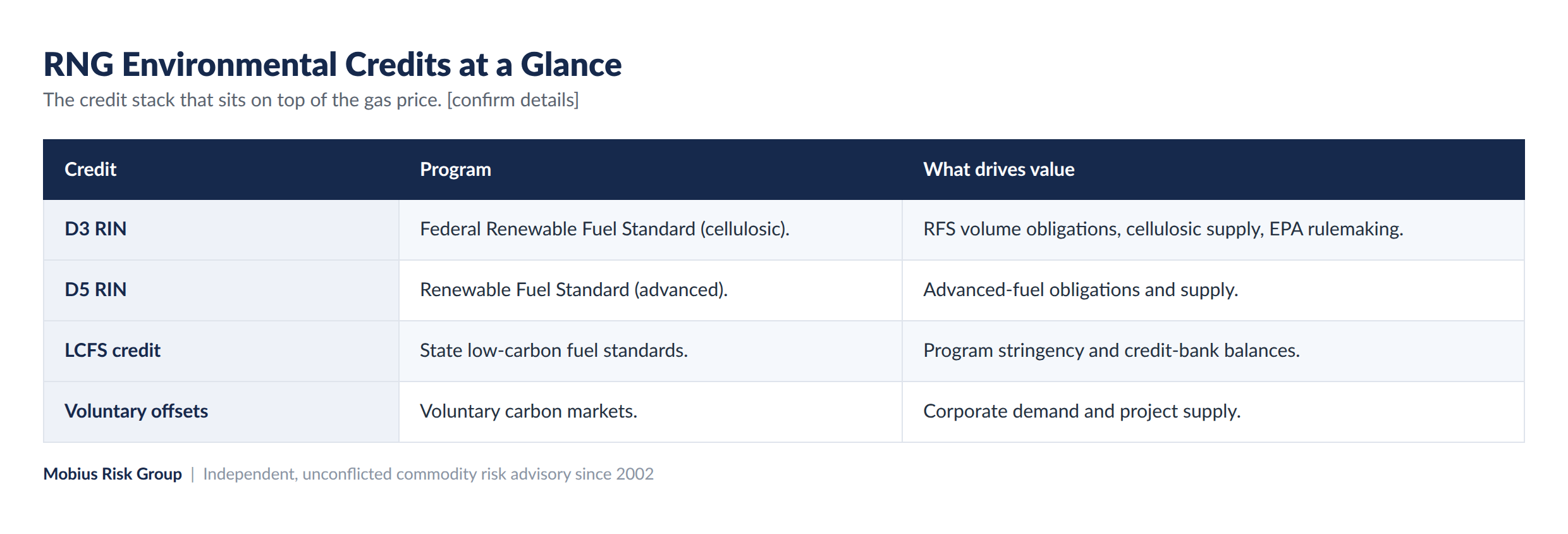
Because each credit responds to different policy and market forces, RNG revenue is a portfolio of exposures — not a single price — and each piece needs its own management.
Why are RNG credits so volatile?
Credit values hinge on policy: an EPA volume decision or a change in a state program can move them sharply, and the markets are thinner and less standardized than natural gas. That makes environmental-credit risk the hardest and most important part of an RNG program to manage.
How Mobius Risk Group helps
Mobius brings commodity and environmental-market risk management to RNG projects, tracking credit and gas exposure together and helping producers lock value through contracts and offtake structure.
Frequently Asked Questions
What is a D3 RIN?
A cellulosic renewable identification number generated by qualifying RNG under the federal Renewable Fuel Standard; obligated parties buy them to meet volume obligations.
What drives D3 RIN value?
RFS volume obligations, the supply of cellulosic fuel, and EPA rulemaking — policy factors rather than natural gas fundamentals.
What is the LCFS credit?
A credit under state low-carbon fuel standards, earned based on a fuel’s carbon intensity; its value depends on program stringency and credit-bank balances.
Subscribe to receive the latest Mobius Research & updates