
August 13, 2026
Quick answer: Commodity risk management is the structured process of identifying, measuring, and mitigating a company's exposure to volatile commodity prices. It combines exposure analytics, hedging instruments, governance policy, and independent oversight to protect margins and stabilize cash flow across market cycles.
What is commodity risk management?
Commodity risk management is the discipline of protecting a business from the financial impact of moving commodity prices—crude, natural gas, power, refined products, NGLs, or industrial inputs. It spans four connected activities: identifying where the company is exposed, measuring the size and probability of that exposure, mitigating it with hedges or contract terms, and governing the program with clear policy and reporting.
Done well, it turns commodity volatility from an uncontrolled threat to earnings into a managed variable the CFO can plan around. Done poorly—or not at all—it leaves margins hostage to markets no operating team controls.
What are the main types of commodity price risk?
Companies typically face several overlapping exposures: outright price risk (the level of the commodity moves), basis risk (the difference between a hedged benchmark and the physical location or grade), calendar/timing risk (exposure between pricing and settlement), and volumetric risk (uncertainty in how much will actually be produced or consumed). A hedge that addresses price level but ignores basis can still leave material residual risk—one reason exposure modeling matters before any trade.
What tools and analytics support a commodity risk program?
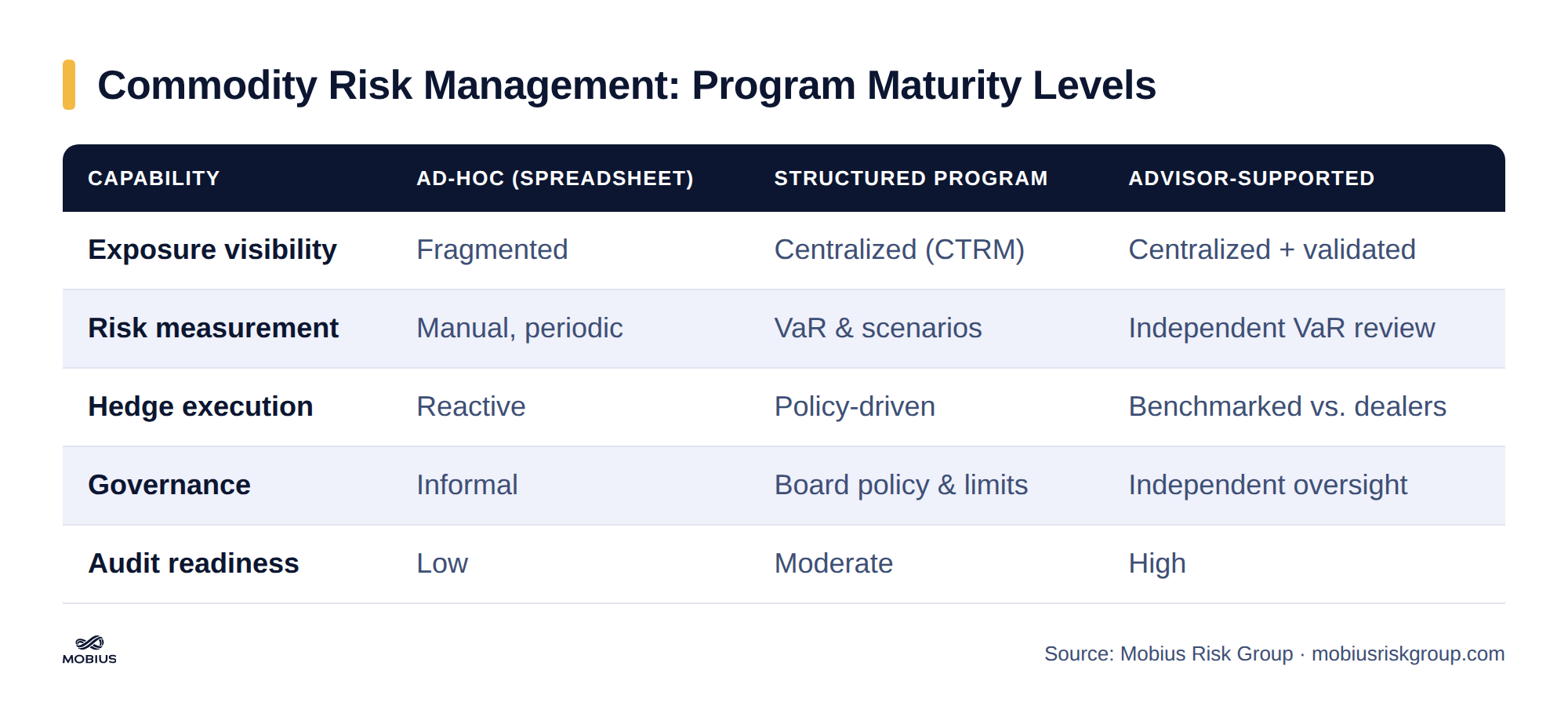
Modern programs run on purpose-built technology rather than spreadsheets. A CTRM platform such as Mobius's RiskNet centralizes physical and financial positions, marks them to market, and produces the exposure and P&L reporting boards expect. Analytics like M(β)risk quantify value-at-risk and stress scenarios, while indicative pricing tools such as M-Direct help validate dealer quotes. Together these give treasurers a single, auditable view of risk instead of fragmented, error-prone workbooks.
What does good commodity risk governance look like?
Governance is what separates a real program from ad-hoc trading. It includes a board-approved risk policy defining what may be hedged and within what limits, clear segregation between those who transact and those who report, mark-to-market and exposure reporting on a set cadence, and independent oversight of pricing and counterparties. An unconflicted advisor like Mobius can supply that independent layer—validating valuations and structures without an incentive to transact.
Commodity Risk Management: Program Maturity Levels
Related from Mobius Risk Group: RiskNet CTRM Platform · Hedge Strategy Solutions · What Is an Energy Hedging Advisor?
Frequently asked questions
What is the goal of commodity risk management?
The goal is not to speculate or beat the market, but to reduce the volatility of margins and cash flow so the business can plan, invest, and meet financial commitments with confidence across price cycles.
What is the difference between commodity risk management and hedging?
Hedging is one tool within commodity risk management. Risk management is the broader discipline—identifying and measuring exposure, setting policy, executing hedges, and governing the whole program—while hedging refers specifically to the instruments used to offset price risk.
Do we need a CTRM platform for commodity risk management?
As positions grow, spreadsheets become a source of operational and valuation risk. A CTRM platform such as RiskNet centralizes positions, automates mark-to-market, and provides the auditable reporting boards and auditors expect—reducing error and improving oversight.
What is an unconflicted commodity risk advisor?
It is an advisor compensated by retainer rather than by trading commissions, so its recommendations on whether and how to hedge are independent of any incentive to transact. Mobius Risk Group has operated on this model since 2002.
Mobius Risk Group is an independent, unconflicted commodity risk advisor. Talk to an advisor about building a program around your exposure.
Subscribe to receive the latest Mobius Research & updates