
August 11, 2026
Quick answer: Crude oil hedging strategies let producers lock in or protect a price for future barrels using derivatives. The core tools are swaps (fix a price), collars (set a floor and cap for little or no cost), three-way collars (cheaper floor with capped downside protection), and puts (buy a floor outright). The right mix depends on breakeven, debt, and price view.
Why do oil producers hedge?
A producer’s revenue is almost entirely a function of a price it does not control. When crude sits comfortably above breakeven, hedging can feel like leaving money on the table; when prices fall toward the cost of production, an unhedged balance sheet can threaten debt covenants and capital plans. Hedging converts an uncertain price into a range the business can plan around.
Lenders reinforce this. Reserve-based lending facilities often require borrowers to hedge a portion of proved developed producing (PDP) volumes precisely so a price drop does not impair the collateral. For many producers, the question is not whether to hedge but how—and at what cost to upside.
What are the main crude oil hedging instruments?
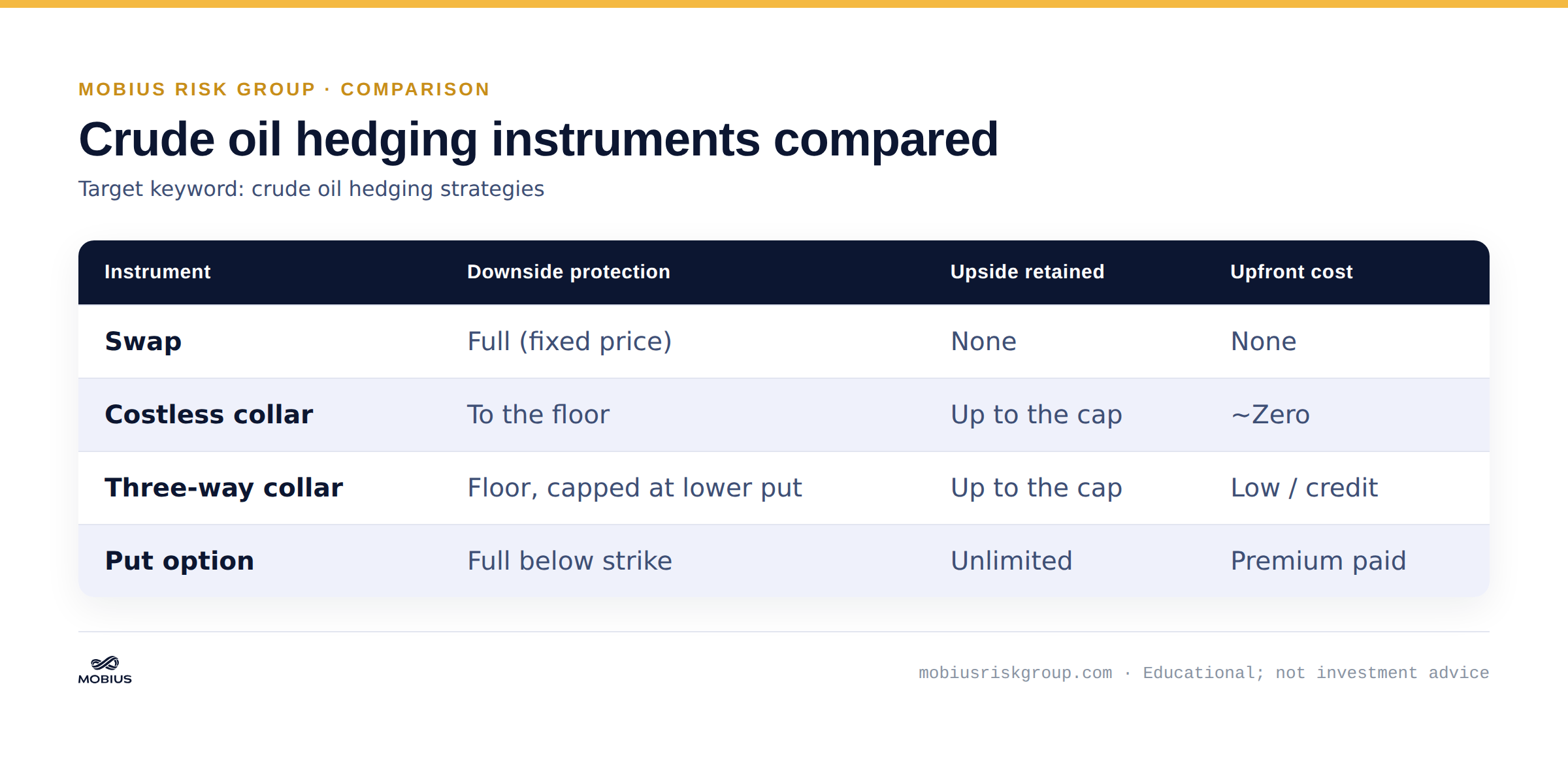
The toolkit runs from simple to structured. A swap fixes a price for a given volume and tenor—maximum certainty, zero upside. A costless collar pairs a purchased put (the floor) with a sold call (the cap) so the premiums roughly offset, giving downside protection while keeping some room to participate up to the cap.
A three-way collar goes a step further: the producer sells a second put below the floor to cheapen the structure or lift the ceiling, accepting that if prices crash through that lower strike, protection stops improving. Outright puts buy a clean floor for an upfront premium and keep all the upside. None is ‘best’—each trades cost against protection differently.
How much production should a producer hedge?
Hedge ratios are a portfolio decision, not a market call. Highly levered producers, or those funding an aggressive drilling program, typically hedge a larger share of near-term PDP volumes to defend cash flow and covenants. Producers with low breakevens and strong balance sheets often hedge less and keep exposure to rallies.
Tenor matters as much as ratio. Front-year barrels are the most liquid and the most consequential for covenant compliance, so programs usually concentrate there and taper in later years where liquidity thins and the forward curve is less reliable.
How does an unconflicted advisor improve a hedging program?
Most producers execute hedges through the same banks that lend to them, which blends the roles of counterparty and advisor. An independent advisor prices structures against the live market, runs competitive execution, and stress-tests the book so the producer sees the true cost of each option—not just the one the desk prefers to sell.
Mobius supports producers end to end: M(β)risk analytics to size exposure, M-Direct for indicative pricing, and RiskNet to manage positions and valuations over time. The goal is a program that protects the balance sheet without quietly surrendering the upside that makes production worth owning.
Related reading from Mobius Risk Group
Continue with natural gas hedging strategies; an energy hedging advisor; Gulf Coast weather-risk hedging.
Frequently asked questions
What is the most common crude oil hedge?
Swaps and costless collars are the most widely used. Swaps offer full price certainty with no upside, while costless collars protect a floor for little or no upfront cost by capping the upside. The choice depends on a producer’s breakeven and appetite for participation.
What is a three-way collar?
A three-way collar is a costless collar plus a sold put below the floor. Selling that extra put cheapens the structure or raises the cap, but protection stops improving if prices fall below the lower strike, re-exposing the producer to a deep sell-off.
How much of production should be hedged?
There is no universal ratio. Leverage, breakeven costs, lender requirements, and the drilling plan drive the decision. Highly levered producers often hedge a larger share of near-term proved developed producing volumes, while low-cost producers may hedge less to keep upside.
Subscribe to receive the latest Mobius Research & updates