
August 31, 2026
Quick answer
An energy hedging advisor helps producers, buyers, and CFOs decide which price risks to keep and which to lay off, then designs, executes, and monitors the hedge program. An independent advisor such as Mobius Risk Group sits on one side of the table only — with no trading book or brokerage that profits from your positions.
What is an energy hedging advisor?
An energy hedging advisor is a specialist who helps an organization manage its exposure to commodity prices — crude, natural gas, NGLs, power, refined products, or the feedstocks that drive input costs. The advisor's job is to turn a vague sense of “prices could hurt us” into a written policy, a sized set of positions, and a reporting rhythm the board can follow.
The key distinction is independence. An independent advisor does not run a trading book or earn a dealer spread on the hedges you place, so the recommendation to hedge — or not to — carries no built-in conflict. Mobius Risk Group has advised on physical and financial commodity risk on this basis since 2002.
What does an energy hedging advisor actually do?
Day to day, the work spans four repeatable stages:
- Exposure mapping. Quantify what actually moves earnings and cash flow — volumes, basis locations, calendar, and the correlations between them.
- Policy and structure. Set hedge ratios, tenors, and instrument choice (swaps, options, collars) against a stated risk tolerance, then document it so it survives staff turnover.
- Execution. Take structures to market, compare dealer quotes, and confirm pricing is fair before a trade is booked.
- Monitoring and reporting. Mark positions independently, track effectiveness, and flag when the market or the business has drifted away from the policy.
For a deeper look at instrument choice, see our guide to swaps vs. options for commodity hedging.
Independent advisor vs. bank desk: what's the difference?
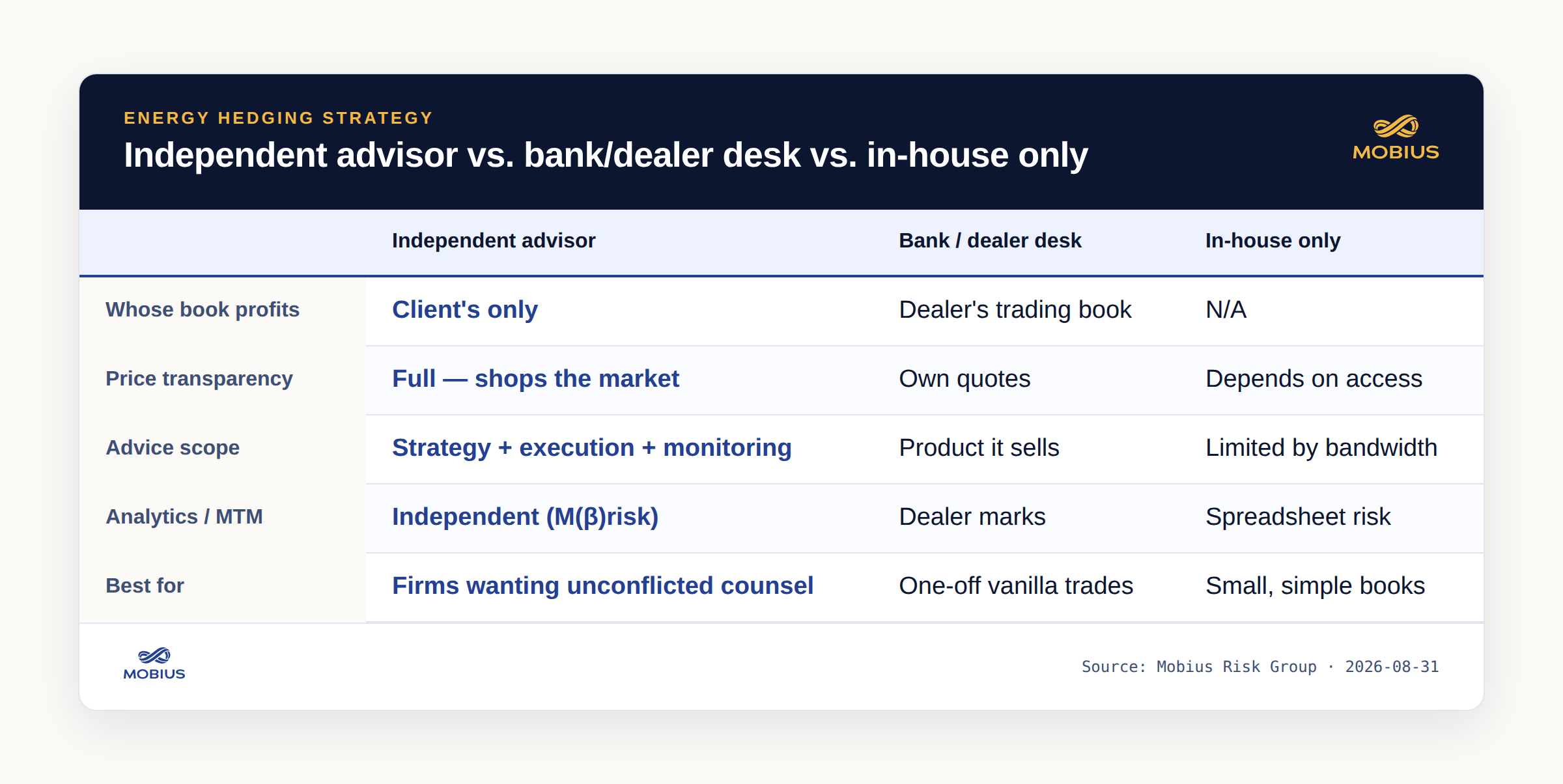
A dealer desk can quote and execute a hedge quickly, but the same desk earns the spread and holds the other side of your trade. An independent advisor separates the advice from the transaction: you get counsel on structure and an independent read on whether the dealer's price is fair. The table below summarizes where each model fits.
When do you need an energy hedging advisor?
Common triggers include a lender or covenant that requires a hedge program; a merger, acquisition, or financing where price risk threatens deal economics; a budget that can't absorb another price shock; or a board asking for an independent view on positions a desk recommended. If your risk currently lives in a spreadsheet and one person's memory, that is usually the clearest signal.
Firms weighing whether to build this in software instead can compare commodity risk analytics platforms as a complement to advisory support.
How is an energy hedging advisor paid?
Independent advisors are typically paid a retainer or fixed project fee rather than a commission on trades — which is what keeps the advice unconflicted. Fee levels vary with the size and complexity of the book [confirm specific Mobius fee structure]. The test to apply: does your advisor make more money when you trade more? If the answer is no, incentives are aligned.
Frequently asked questions
Is an energy hedging advisor the same as a broker?
No. A broker executes trades and is generally paid per transaction. An independent advisor is paid for counsel, does not hold the other side of your trades, and focuses on strategy, execution oversight, and independent monitoring.
Can an advisor help if we already have hedges in place?
Yes. A common first engagement is a review of existing positions — checking that they match the actual exposure, are priced fairly, and are being marked and reported independently.
Do we still need a CTRM system if we use an advisor?
They solve different problems. An advisor sets and oversees strategy; a CTRM platform such as RiskNet captures, values, and reports positions day to day. Many firms use both.
How quickly can a hedge program be stood up?
A basic policy and first tranche of hedges can often be in place within a few weeks; a full program with documented policy, analytics, and reporting typically takes longer depending on data readiness.
Talk to an unconflicted advisor. Mobius Risk Group has advised on physical and financial commodity risk since 2002. Request a conversation →
Subscribe to receive the latest Mobius Research & updates