
August 6, 2026
Quick Answer
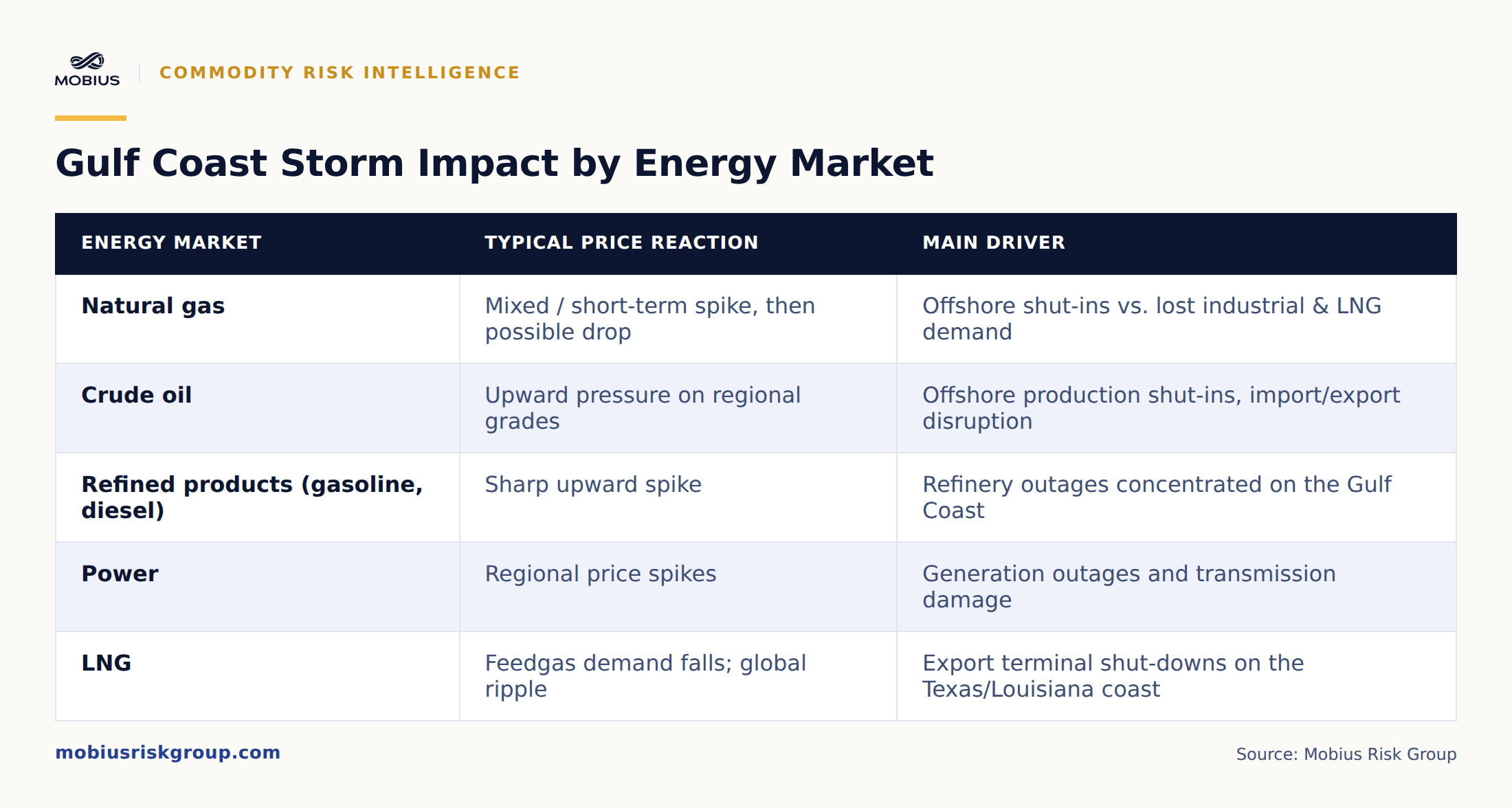
Gulf Coast storms move energy prices by disrupting supply and infrastructure faster than demand. Hurricanes shut in offshore crude and gas production, close refineries and LNG export terminals, and knock out power — tightening crude, natural gas, refined products and power markets while sometimes softening gas demand from damaged facilities.
Why do Gulf Coast storms move energy prices at all?
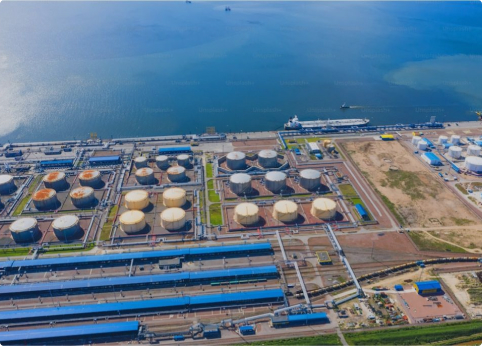
The U.S. Gulf Coast is the densest concentration of energy infrastructure in the world: offshore oil and gas production, roughly half of U.S. refining capacity, the majority of U.S. LNG export capacity, and a web of pipelines and power generation. When a hurricane enters the Gulf of Mexico, traders must reprice the probability that some of that infrastructure goes offline. Prices often move on the forecast, days before landfall, and then again on the realized damage.
How do hurricanes affect natural gas prices?
The natural gas reaction is the most nuanced. Storms shut in offshore Gulf production and can spike prices short term, but they also destroy or idle demand — industrial plants, power load, and LNG export terminals that suddenly stop pulling feedgas. If a major LNG facility goes down, several billion cubic feet per day of demand can disappear overnight, which can push Henry Hub lower even as production is disrupted. The net effect depends on whether supply or demand is hit harder. Our deep-dive on how hurricane season affects natural gas prices walks through recent examples.
How do storms affect crude oil and refined products?
Crude tends to see upward pressure on regional grades as offshore production is shut in and import/export terminals close, though global benchmarks may barely move if the disruption is contained. The sharpest, most reliable reaction is in refined products: because so much refining sits on the Gulf Coast, a storm that closes several refineries removes gasoline and diesel supply quickly, spiking crack spreads and pump prices regionally — even when crude itself is flat or falling.
How long do storm-driven price moves last?
Supply-side shut-ins are usually temporary; offshore platforms and refineries restart within days to a few weeks unless there is severe damage. The lasting price effects come from prolonged refinery or export-terminal outages and from basis dislocations — the spread between Gulf Coast hubs and the rest of the country — which can stay elevated while logistics normalize. This is why hedging basis, not just the flat price, matters during storm season.
How can companies hedge Gulf Coast weather risk?
Weather-driven volatility is hedgeable but requires discipline. Producers can layer hedges ahead of the season to protect cash flow; buyers can cap exposure to product spikes; and both can use options to keep upside while limiting downside. The key is a strategy set before a storm is named — not a scramble after it forms — and execution that does not tip a thin, fast-moving market. See how to price a hedge without tipping the market.
Frequently asked questions
How do Gulf Coast storms affect energy prices?
Gulf Coast storms disrupt energy supply and infrastructure — shutting in offshore crude and gas production, closing refineries and LNG terminals, and damaging power systems. This tends to spike refined-product and regional crude and power prices, while natural gas can move either way depending on whether supply or demand is hit harder.
Do hurricanes make natural gas prices go up or down?
Both are possible. Offshore shut-ins push prices up, but if hurricanes idle large LNG export terminals or industrial demand, natural gas prices can fall because several billion cubic feet per day of demand disappears at once. The net direction depends on the balance of supply and demand losses.
Why do gasoline prices spike after Gulf Coast hurricanes?
About half of U.S. refining capacity sits on the Gulf Coast. When a storm forces multiple refineries offline, gasoline and diesel supply drops quickly, spiking crack spreads and pump prices — often even when crude oil prices are flat or falling.
When should companies hedge for hurricane season?
Before the season starts and before any specific storm is named. Building a hedging strategy in advance avoids transacting into thin, fast-moving markets after a storm forms, when liquidity is poor and prices have already reacted.
Subscribe to receive the latest Mobius Research & updates