
August 12, 2026
Quick answer: For energy hedging, a swap locks in a fixed price at (usually) zero upfront cost but gives up all upside, while an option pays a premium to set a worst-case price while keeping flexibility. Choose swaps when you need budget certainty and have high directional conviction; choose options when direction is uncertain and you want insurance without surrendering upside.
What is the difference between a swap and an option in energy hedging?
A swap exchanges a floating market price for a fixed price. It typically costs nothing upfront and delivers complete price certainty — but you forgo any favorable move. An option (a cap for buyers, a floor for sellers, or a collar) is bought for a premium and gives the right, not the obligation, to transact at a strike price. It sets a worst case while letting you benefit if the market moves in your favor.
When should you use a swap to hedge energy?
Swaps fit when budget certainty is paramount — a fixed fuel cost in a contract bid, a covenant that requires predictable cash flow, or a strong directional view. Because most swaps require no premium, they are capital-efficient at inception. The trade-off is opportunity cost and potential margin calls if the market moves against the position before settlement.
Swaps vs Options: What You're Really Choosing
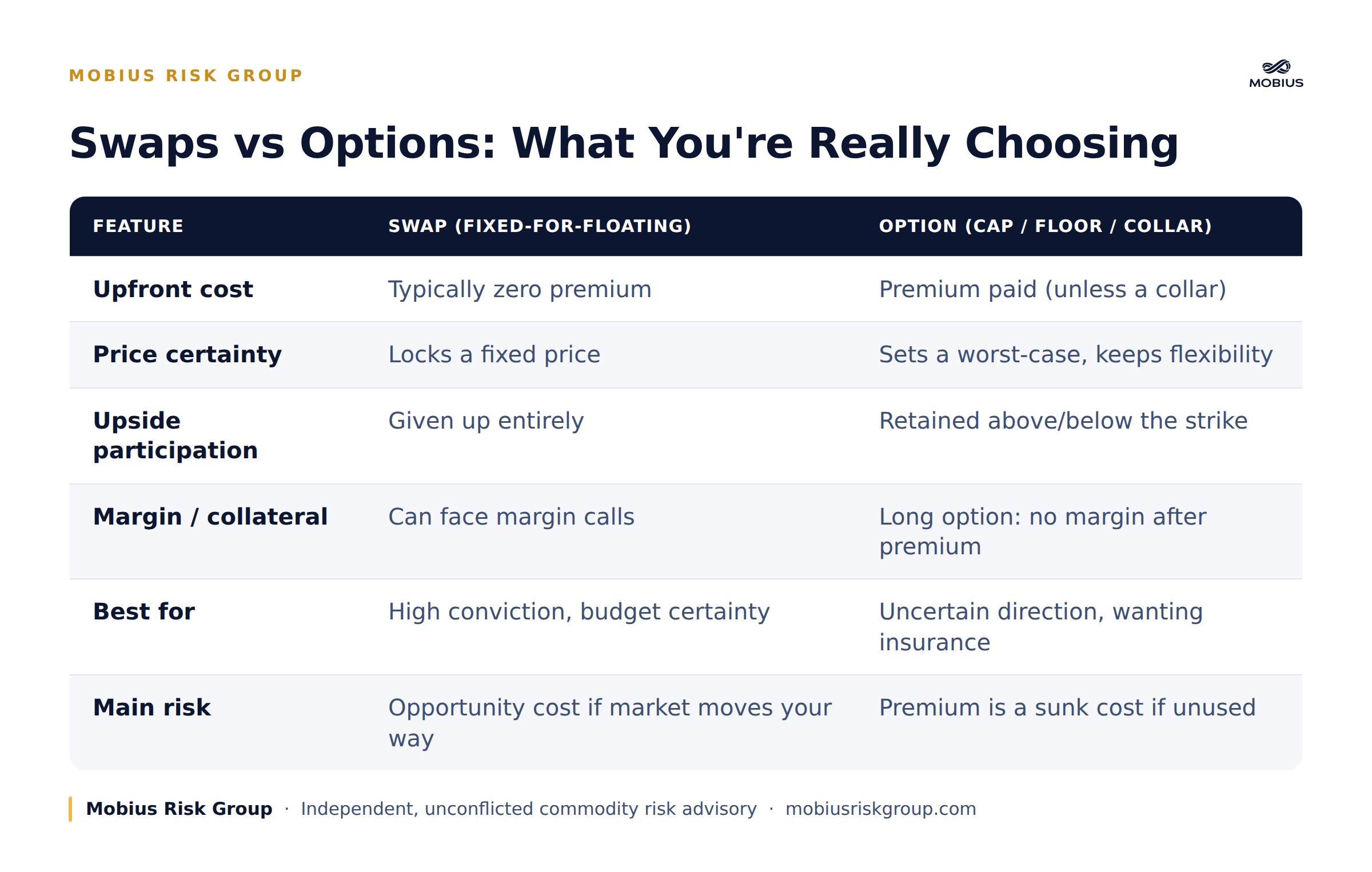
Swaps buy certainty; options buy insurance with optionality. Many programs blend both — e.g. collars — to cap cost while preserving some upside.
When are options the better energy hedge?
Options are the better choice when direction is genuinely uncertain and the ability to participate in favorable moves has value. A buyer worried about a hurricane-driven natural gas spike can cap exposure while still benefiting if prices fall. The premium is the cost of that insurance; if the protection is never needed, it is a sunk cost — the same logic as any insurance policy.
How do you decide between swaps and options?
Start from the risk you must eliminate versus the flexibility you want to keep, your tolerance for upfront cost and margin, and your conviction on price direction. Many disciplined programs blend both — for example a costless collar that caps downside while giving up only extreme upside. An independent advisor models the payoff, cost, and margin implications before you trade, so the instrument choice is driven by your risk profile rather than a dealer’s preference.
Related reading
Frequently asked questions
Is a swap or an option cheaper?
A swap usually has no upfront premium, while an option requires paying a premium. But “cheaper” depends on outcome: a swap can carry large opportunity cost if the market moves your way, whereas an option’s cost is capped at the premium.
What is a collar in energy hedging?
A collar combines buying one option and selling another (for example a buyer buys a cap and sells a floor) to reduce or eliminate net premium, capping downside while giving up some upside.
Do options require margin?
A long option position generally requires no margin beyond the premium paid, which is one reason buyers use them to avoid the margin-call risk of swaps.
Can I combine swaps and options?
Yes. Many hedging programs layer swaps and options across tenors to balance certainty, cost, and flexibility. Mobius designs blended structures around a client’s specific exposure.
Talk to an unconflicted advisor. Mobius Risk Group helps energy producers, industrial buyers, and CFOs make these decisions with independent analytics and no dealing book. Contact the Mobius team to pressure-test your approach.
Subscribe to receive the latest Mobius Research & updates